
Operating Challenges
High-frequency schedules, charging windows that compete with departures, the balance between passenger comfort and energy use, and long-term maintenance cost.

Solutions
The same vehicle may require very different specifications depending on payload, roads, climate and local regulations. Start with the real operating scenario, and we can then match the vehicle, energy solution and cooperation model.


From passenger shuttle and last-mile delivery to site and municipal applications, start with the real duty cycle before defining the vehicle, power system, configuration and service approach.

For short-distance passenger transport in tourist attractions, hotels, communities, industrial parks and local routes, balancing passenger space, operating efficiency and routine maintenance.
Scenarios ↗
For urban last-mile delivery, local transport and site logistics, with vehicles matched to payload, cargo body, road conditions and charging availability.
Scenarios ↗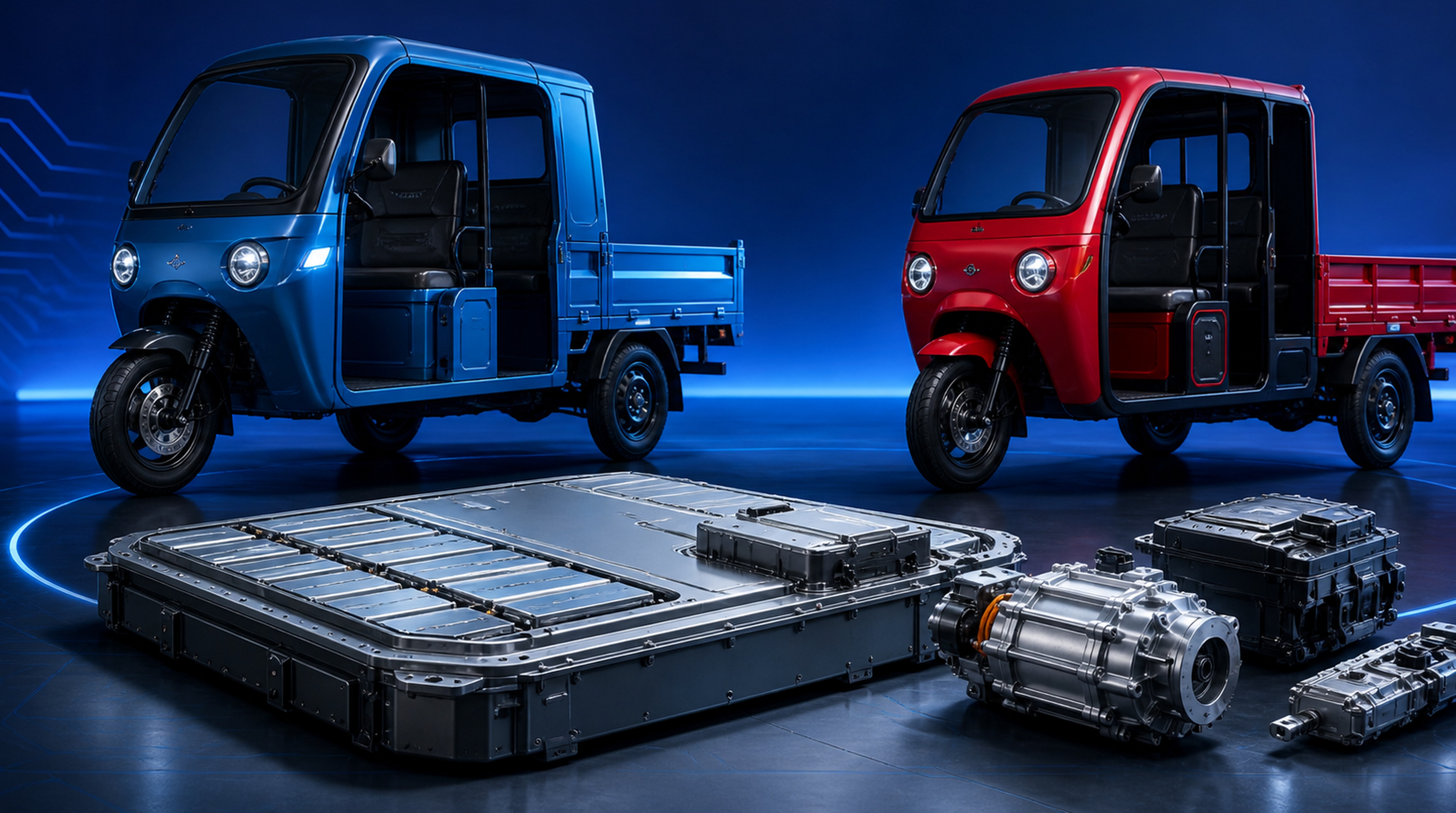
For farms, industrial parks and controlled-site transport, with emphasis on ground clearance, payload, attachments and continuous-duty requirements.
Scenarios ↗For cleaning, inspection, collection and other special-purpose operations, with configurations built around the chassis, mounted equipment and target-market requirements.
Scenarios ↗For short-distance shuttle services in tourist attractions, hotels, communities, industrial parks and local routes. Selection should consider seating, boarding convenience, daily mileage, HVAC energy use and charging windows—not range alone.
High-frequency schedules, charging windows that compete with departures, the balance between passenger comfort and energy use, and long-term maintenance cost.
Choose the body and seating layout around passenger flow and route conditions, then define the battery and charging solution around depot or site conditions.
Delivery training, routine inspection guidance, recommended wear parts and maintenance scheduling that fits operating hours.
For urban last-mile delivery, local transport and site logistics. The key is balancing useful payload, range and charging efficiency around payload, cargo-box size, road conditions and daily mileage.
Payload and battery capacity directly affect each other, delivery schedules can be demanding, and charging access along the route has a major impact on vehicle availability.
Confirm the cargo, payload and route first, then match the vehicle platform, battery, cargo body and charging configuration.
Route-fit recommendations, driver training, spare-parts lists and delivery support for fleet orders.
Suitable for farms, industrial parks, closed sites and internal transport or work tasks, with particular attention to gradients, road surfaces, payload, passability, continuous working time and attachment interfaces.
Rough roads and high loads can significantly affect energy use and component life, while downtime can disrupt continuous operations.
Match structure, tires, braking, battery and attachments to the duty cycle, with sample or application validation where needed.
Key-component recommendations, operator training, duty-cycle validation and project-specific technical support.
Suitable for cleaning, collection, inspection and other professional tasks. Chassis, body interfaces, operating power and target-market requirements should be confirmed together early in the project.
Frequent stop-start operation, auxiliary-equipment power and working hours can change real energy consumption substantially, so generic road-cycle data may have limited value.
Define the chassis, battery, interfaces and control solution around the mounted equipment and operating radius.
Equipment integration, delivery training, spare parts and after-sales responsibilities should be agreed before the order is finalized.
Whether the vehicle is used for passenger transport, delivery or special-purpose work, project evaluation starts with four factors: duty cycle, energy, cost and service.
The same vehicle can require very different configurations across applications. Selection should start with route conditions and duty cycle, not a product catalog.
Charging windows, charging conditions and the daily operating rhythm directly affect vehicle availability, so the energy solution should be confirmed together with the vehicle and duty cycle.
Purchase price is only one part of the decision. Energy use, maintenance, wear parts and vehicle utilization together determine long-term operating cost.
Passenger shuttles need charging that fits the timetable; delivery vehicles prioritize turnaround and maintenance efficiency; site and special-purpose vehicles depend more heavily on duty-cycle fit and spare-parts support.
Tell us the operating location, road conditions, daily mileage, payload or passenger requirements, and we can help identify the right product direction and configuration priorities.